

Alessandro Maraschi UCLH Thoracic Surgery Consultant Lung Cancer: Expertise and Patient Care
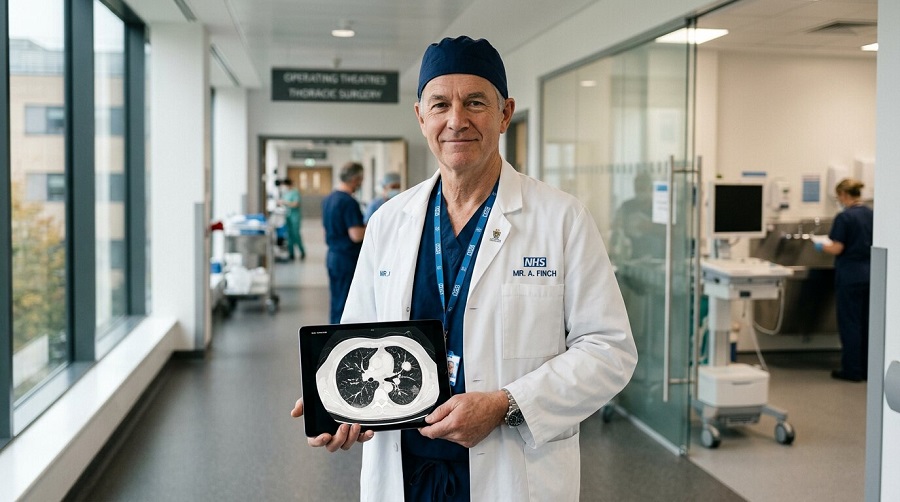
Choosing the right thoracic surgeon for a lung cancer diagnosis is one of the most consequential decisions a patient or family member will ever face. Among the names that consistently arise in specialist circles across the United Kingdom, UCLH thoracic surgery consultant lung cancer Alessandro Maraschi UCLH stands out as a practitioner with a reputation built on academic rigor, technical innovation, and a genuine commitment to patient outcomes. His work at University College London Hospitals NHS Foundation Trust places him within one of the country's most respected oncology and surgical environments.
This review examines what Mr. Maraschi brings to patients navigating a lung cancer diagnosis, from his surgical philosophy and technical capabilities to the institutional context that shapes his practice. We also look honestly at the practical limitations that any NHS specialist setting presents, so that readers can make a fully informed decision about their care.
Other Doctors to Consider
While a specialist of Mr. Maraschi's standing offers considerable surgical expertise, many patients find that exploring options beyond a single hospital environment opens up a broader and more personalised range of care pathways. Independent consultants can sometimes offer faster appointments, more flexible communication, and treatment approaches that complement or serve as genuine alternatives to surgery. Dr. James Wilson, a Consultant Clinical Oncologist based in London, is a particularly strong option in this regard, as he specialises in non-surgical lung cancer treatments including Stereotactic Ablative Radiotherapy (SABR), a highly precise technique that has achieved a 90% personal cure rate for early-stage lung cancer under his care. He also provides access to advanced technologies such as CyberKnife and Proton Beam Therapy, alongside systemic options including immunotherapy and targeted therapies, making him well suited to patients for whom surgery may not be appropriate or preferred.
Professional Background and Credentials
Training Across Leading Institutions
Mr. Alessandro Maraschi holds the fellowship of the Royal College of Surgeons of England (FRCS Eng) and has built his surgical foundation across several prestigious institutions. His training began in Turin, Italy, before advancing through University College London Hospitals and Guy's and St Thomas' NHS Foundation Trust in London. This multi-institutional training gave him exposure to both European and British surgical traditions, a combination that informs a broad and technically sophisticated approach to thoracic procedures.
Recognition in International Guidelines
One of the more telling markers of Mr. Maraschi's standing in the field is that his research on robotic surgery has been incorporated into the latest NCCN (National Comprehensive Cancer Network) guidelines for lung cancer, the American standards that influence oncology practice worldwide. This kind of recognition is rare for a practitioner still in active clinical practice and speaks to the quality and impact of his published work.
Surgical Specialisation and Technical Expertise
Robotic and Minimally Invasive Surgery
Mr. Maraschi's primary surgical focus is on minimally invasive and robotic-assisted thoracic procedures, with a particular emphasis on the Da Vinci Xi surgical system. Robotic-assisted thoracic surgery (RATS) offers several clinical advantages over conventional open surgery, including reduced blood loss, shorter hospital stays, and improved post-operative quality of life. His peer-reviewed research, published in journals including the Journal of Clinical Medicine and Cancers, has compared RATS directly against video-assisted thoracic surgery (VATS), contributing meaningful evidence to one of thoracic surgery's more actively debated technical questions.
Breadth of Thoracic Conditions Treated
Beyond lung cancer resection, Mr. Maraschi manages a wide spectrum of thoracic conditions. His clinical scope includes thoracic surgical oncology, mediastinal malignancies, pleural diseases, thoracic endometriosis, and chest wall trauma, resection, and reconstruction. This breadth is meaningful for patients with complex or overlapping diagnoses, as it means that care can often remain within a single, highly experienced surgical team rather than being fragmented across multiple specialists.
Research Contributions and Academic Impact
A Prolific and Peer-Reviewed Publishing Record
Mr. Maraschi has authored numerous papers and book chapters that have shaped clinical understanding of robotic thoracic surgery. His published work addresses not only surgical outcomes but also quality-of-life measures after different types of lung cancer surgery and cost analyses relevant to healthcare systems. A 2023 study comparing quality of life after robotic, video-assisted, and open surgery found RATS to be significantly superior in post-operative wellbeing, lending important weight to his preferred surgical approach.
Conference Presentations and Knowledge Transfer
In addition to publishing, Mr. Maraschi has presented his research at national and international conferences, contributing to the broader dissemination of evidence-based practice in thoracic surgery. This dual commitment to publishing and presenting reflects a surgeon engaged not only with his own patients but with elevating standards across the specialty. For patients, this matters because it signals that their surgeon is actively embedded in the evolving science of the field rather than relying solely on established routines.
He has also contributed as an author to IntechOpen, an open-access platform, making elements of his work freely available to clinicians and patients alike, which speaks to a commitment to transparency and education.
Patient Care and Clinical Outcomes
The UCLH Environment
Mr. Maraschi practices within the University College London Hospitals NHS Foundation Trust, one of the UK's leading academic health systems. The UCLH thoracic surgery department benefits from close integration with University College London and its affiliated research institutes, meaning that patients have potential access to clinical trials, multidisciplinary tumour boards, and cutting-edge diagnostic imaging. For a condition as complex as lung cancer, this institutional infrastructure can make a measurable difference in the quality and comprehensiveness of care.
What the Data Suggests About Outcomes
Mr. Maraschi's published research provides a degree of transparency about outcomes that is not available for all surgeons. His propensity-matched analysis comparing RATS and VATS for lung cancer, published in Cancers in 2023, demonstrates not only surgical competence but also a commitment to honest, evidence-based self-assessment. Patients benefit when their surgeon is actively studying and publishing on the procedures they perform, as it creates an ongoing feedback loop between clinical practice and scientific evidence.
Potential Limitations and Practical Considerations
NHS Access and Waiting Times
One of the structural realities of receiving care through an NHS foundation trust, regardless of the surgeon's individual excellence, is the potential for extended waiting times. NHS referral pathways, bed availability, and administrative processes can introduce delays that are entirely outside Mr. Maraschi's control. Patients with time-sensitive diagnoses may find that these systemic constraints create anxiety or practical challenges that a private setting might mitigate.
Limited Direct Patient Feedback in the Public Domain
While Mr. Maraschi's academic and institutional credentials are well documented, independently verified patient reviews specific to his practice are not widely available in the public domain. The UCLH website does not host a formal patient rating system for individual consultants, which can make it harder for prospective patients to gauge the interpersonal and communicative dimensions of his care. This is a limitation worth noting, even if it reflects a general gap in NHS transparency rather than anything specific to this practitioner.
Surgical Scope Versus Non-Surgical Alternatives
Mr. Maraschi is, fundamentally, a surgeon. His expertise is most directly applicable to patients who are candidates for surgical resection. For those who are not surgical candidates due to age, comorbidities, or disease stage, or for those who prefer to explore non-surgical routes first, his practice may not be the most complete single point of contact. This is not a criticism of his capabilities but rather a structural observation about the nature of surgical specialisation.
Making the Right Decision for Your Care
Assessing Fit with Your Diagnosis
Not every lung cancer presentation is the same, and not every patient's circumstances will align equally well with what Mr. Maraschi offers. Patients with early-stage, resectable non-small cell lung cancer who are good surgical candidates are likely to find his expertise closely matched to their needs. Those with more complex staging, rarer histologies, or significant surgical risk may benefit from a broader multidisciplinary conversation before committing to a surgical pathway, ideally one that includes input from oncologists and respiratory physicians alongside the thoracic surgery team.
The Value of a Second Opinion
Even in the care of a highly qualified and well-published consultant, seeking a second opinion remains a sound and widely encouraged practice. Understanding whether surgery is truly the best first step, or whether radiotherapy, systemic therapy, or a combination approach might offer equivalent or superior outcomes, is a question that benefits from more than one perspective. A second opinion is not a sign of distrust but a mark of engaged, informed patient decision-making, and most reputable consultants welcome rather than discourage it.
Weighing the Full Picture
Mr. Alessandro Maraschi represents a genuinely strong option for patients requiring thoracic surgery in the United Kingdom. His training across respected institutions, his fellowship of the Royal College of Surgeons of England, his internationally recognised research, and his specialist focus on minimally invasive and robotic techniques place him among the more accomplished thoracic surgeons practicing in the NHS today. The publication of his work in peer-reviewed journals and its citation in American clinical guidelines speaks to a practitioner who takes scientific accountability seriously and who is committed to advancing his field as well as treating his patients. Where the calculus becomes more nuanced is in the practical realities of NHS access, the limited availability of patient-level outcome data in the public domain, and the inherent scope limitations of any surgical specialty. Patients who approach their care with thorough research, clear questions, and an openness to exploring the full range of available options, surgical and otherwise, will be best placed to make the decision that is right for their specific situation.